Climbing
Climbing Grades in the UK: A Beginner's Guide to Diff, VDiff and Beyond
You've seconded a few routes at the wall, followed a friend up something outdoors, and now you're standing at the crag holding a guidebook. The page says HVS 5a. Two pages on, a route is E1 5b. Somewhere in the middle, something is just VDiff, with no number at all. British climbing grades can look like a private language, but the logic is tidy once you know what each half is for.
Why British grades come in pairs
Most climbing nations use a single number. Britain uses two for traditional ("trad") routes: an adjectival grade and, on anything harder than Moderate, a technical grade. Written together as HVS 5a, they answer two different questions. How hard is the route overall? And how hard is the hardest move? UK sport climbing uses a single French grade instead, which is one reason the two systems refuse to line up neatly.
It helps to think of the pair as a weather forecast. The number tells you how hard the worst moment will be. The letters tell you how much of the day you'll spend in it, and whether there's any shelter when things go wrong.
The two halves of a trad grade
The adjectival grade: the whole route
Diff, VDiff, VS, HVS, E1 — this is the headline. It takes in everything: how sustained the climbing is, how good the protection is, how exposed it feels, whether the rock is solid or crumbly, and how hard the route is to read on the way up. A VS with poor gear and a VS with a crack full of nuts can carry the same adjectival grade and feel like entirely different days out.
Compare a short, steep VS 4c at a roadside crag with a thirty-metre VS 4c on a sea cliff that traverses out over the water. The hardest move on each might be identical, but only one of them will have you talking about it in the pub. Both are pitched at the same grade because the adjectival grade is a summary of the whole experience, not just the crux.
The technical grade: the hardest move
The number — 4a, 5b, 6a — describes the hardest single move, or short sequence, on the route in reasonable conditions. It doesn't care about protection, exposure or how tired you'll be by the time you reach it. That's the job of the E-number sitting in front.
Technical grades are not linear in the way they look. The step from 4c to 5a is bigger than the step from 5a to 5b, and most climbers find their progress slows sharply somewhere around 5c and 6a. It is entirely normal to lead VS comfortably for a season before your first clean 5b.
The adjectival grades, from Diff upwards
The names are historical and not literal. "Severe" is a grade most climbers pass through early, and "Difficult" is genuinely easy. The ladder runs roughly like this:
- Moderate (M) and Difficult (Diff) — easy angled, usually well protected. The sort of ground a competent second can move over without much thought.
- Very Difficult (VDiff) — the classic beginner's lead grade. Steeper in places, but short and friendly.
- Hard Very Difficult (HVD) — the awkward middle child between VDiff and Severe.
- Severe (S) and Hard Severe (HS) — proper climbing, with smaller holds and the first places where you'll need to think seriously about gear.
- Very Severe (VS) — the beginner's milestone. VS 4c is a rite of passage for a lot of British climbers.
- Hard Very Severe (HVS) — sustained and pumpy at the top end, but still within reach of a fit, competent leader.
- Extremely Severe (E1 upwards) — above HVS, routes take an E-number instead of another name. E1 to E11 exist, and the hardest trad pitches in the country sit at the top.
What the technical grade is really saying
Technical grades climb in threes: 4a, 4b, 4c, then 5a. Below 4a you'll see 3a to 3c in some guides, but the numbers are often left off easier routes because they add little. From Severe upwards, the number is doing real work.
A few things worth knowing. The grade assumes dry rock and decent conditions — a 5a hold on damp gritstone is not a 5a. It also doesn't measure the whole pitch: a route can be mostly 4a with one 5b move, and it will be graded for that move. And the same number feels different on different rock, so treat your first limestone 5b and your first gritstone 5b as separate experiences.
What the E adds
The E-grade looks at the package. Two routes can both be 5b and be graded E1 and E2, because one is sustained and bold while the other has a single hard move above a bomber wire.
This is where a low technical grade next to a high E-grade is a warning. E3 5c is a very different proposition from E3 6a: the first is likely to be run out, serious or sustained, while the second earns its grade through sheer difficulty with protection appearing where you need it. When you read a guidebook, "bold", "sustained" and "poorly protected" matter as much as the number.
The grade is a summary, not a contract. A well-protected HVS can feel gentler than a bold Severe, and no guidebook number has ever climbed a route for you.
How British trad compares with sport climbing
UK sport routes use French grades: F5, F6a, F6b+, and upwards. A French grade assumes bolts and a safe fall, so it measures pure difficulty and stamina with no penalty for exposure. That means a French 6a and a British VS 4c are not the same animal, even if the moves feel similar on a good day.
As a rough, much-argued guide:
- VDiff or Severe — somewhere around F3 to F4+ on a bolted route
- HS or VS 4c — roughly F4+ to F5
- HVS 5a — around F5+ to F6a
- E1 5b — around F6a, with a head game the French grade doesn't capture
- E3 and above — often F6b upwards, but the comparison stops being useful
Take these figures as a starting point for translating your gym or sport experience, not as a conversion chart. The gap widens the harder you go, because boldness and gear quality become the dominant variables.
Reading the rest of the guidebook line
The grade is only part of the entry. Alongside it you'll usually find a length in metres, a number of pitches, and a star rating. Stars describe quality, not difficulty — a three-star VS is a classic worth travelling for, while a one-star E1 might be a scruffy but exciting eliminate. A route with no stars isn't necessarily bad, just unremarkable.
Watch for the small print too. Words like "loose", "dirty", "vegetated" or "serious" tell you the route hasn't been cleaned up for you, and a bracketed note such as "(bold)" next to a Severe is a genuine warning. Some guides also shift a route's grade between editions as holds break, gear is replaced or a consensus simply changes.
Moving up through the grades
The grades are a ladder, but there is no rule that says you have to climb it in one direction. A simple, unhurried progression works well:
- Second first. Follow dozens of routes, watching where the leader places gear and rests. You'll learn more about placements in a season of seconding than in a fortnight of leading.
- Build mileage below your limit. Lead lots of Diff and VDiff until the ropework and the exposure stop being the hard part.
- Repeat within a grade. Five clean VS leads on different rock types teach you more than one scrappy E1.
- Practise falling and resting. Confidence on a bold route comes from knowing your gear is good and your feet will hold.
- Talk to partners and read the descriptions. A local who has done the route can tell you whether the crux protects well or is a run-out slab.
Give it a few seasons and the page that once said HVS 5a stops looking like code. It becomes a sentence you can read at a glance: steep enough to tire you, one awkward pull, and enough gear to keep it civilised — which is exactly what the two halves were always meant to describe.
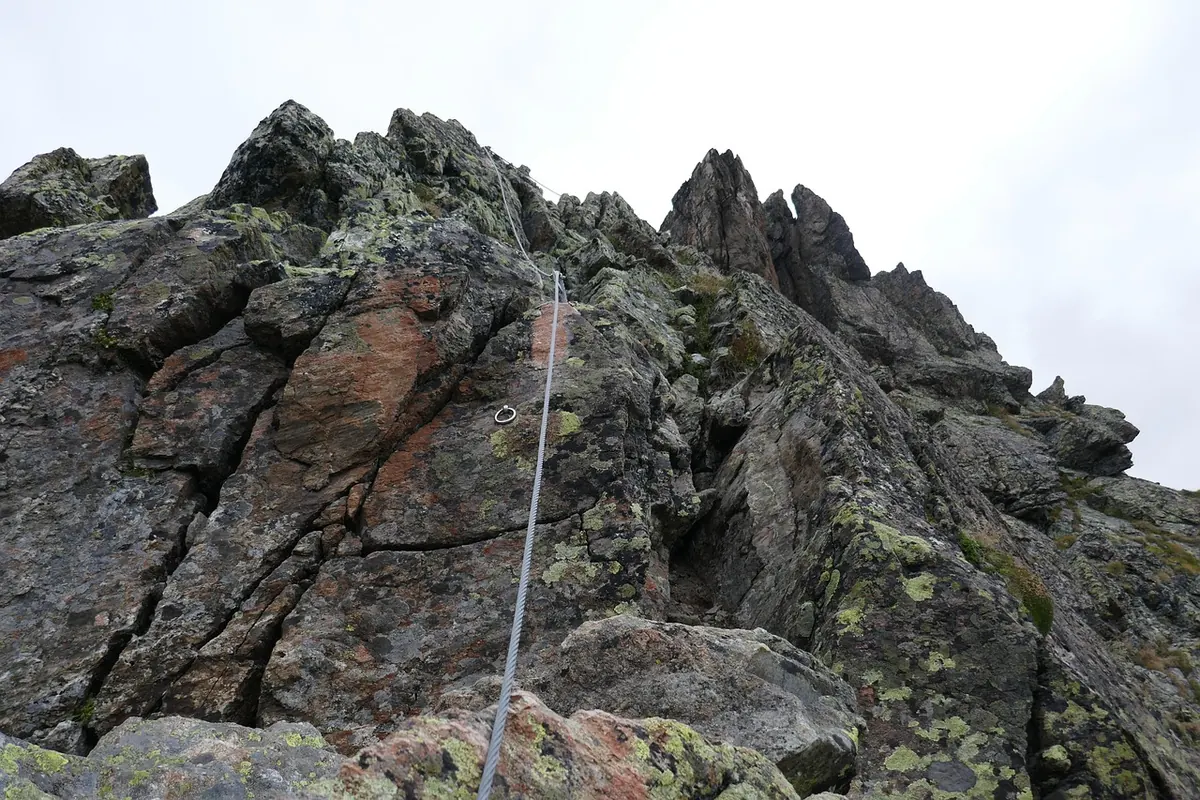
Photo: joergweitz / Pixabay